

Cleansing vs Charging Crystals: What Each One Is For
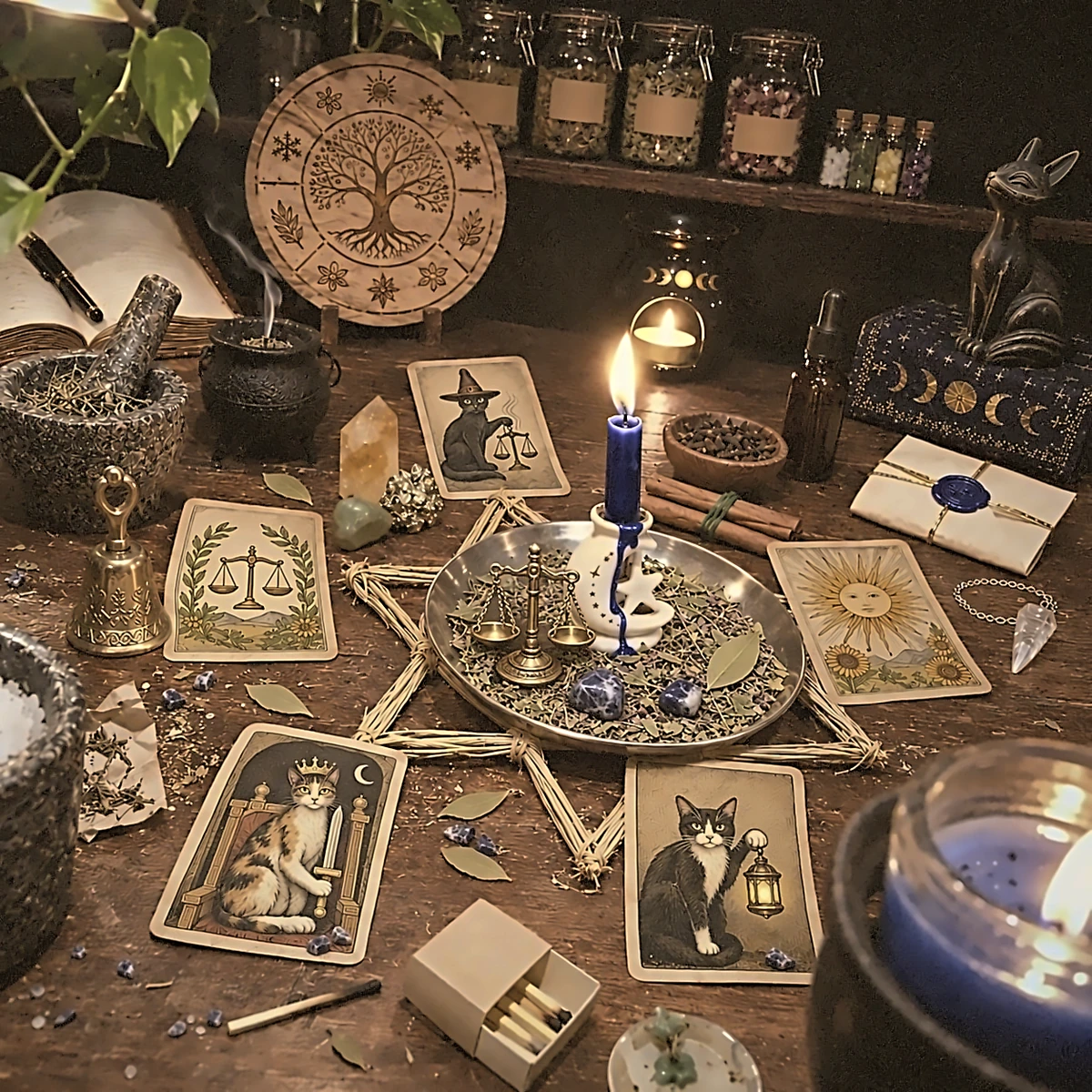
Cleansing and charging get used as if they were the same thing. They are not. One clears a stone, the other gives it a job. Doing both, in that order, is how I prepare every crystal that goes on my table.
What is the difference?
| Cleansing | Charging | |
|---|---|---|
| What it does | Clears what the stone has absorbed | Sets a fresh intention in the stone |
| When | When you first get it, after heavy use, after someone else handles it | After cleansing, before you use it for a new purpose |
| Methods | Smoke, sound, salt beside it, earth | Spoken intention, moonlight, a candle working |
| How long | A few minutes to one night | A few minutes to one night |
How do I cleanse a crystal?
- Smoke. Pass the stone through the smoke of rosemary, bay or incense. I use rosemary smoke from my iron cauldron. It is safe for every stone because nothing touches the surface.
- Sound. Ring a bell or strike a singing bowl beside the stone. Safe for every stone.
- Salt beside it. Set the stone next to a small bowl of salt overnight. Do not bury it in salt: salt scratches soft stones and draws moisture into porous ones.
- Earth. Bury a hard, sturdy stone in a pot of soil for a night or two. Skip this for anything delicate.
- Water. Only for hard stones like clear quartz, and only briefly. Many stones should never sit in water.
How do I charge a crystal?
- Hold it and speak. Hold the cleansed stone in your hand and say what it is for, in one sentence: "You help me speak up at work." This is the simplest and most reliable method.
- Moonlight. Leave it on a windowsill on the night of the full moon. Clouds do not matter.
- A candle working. Place the stone at the base of a candle in the colour of your intention while the candle burns.
Which methods damage which stones?
| Stone | Avoid | Safe choice |
|---|---|---|
| Amethyst, citrine, rose quartz | Long sunlight (colour can fade), sudden heat | Smoke, sound, moonlight |
| Turquoise | Water soaks, heat, oils and chemicals | Smoke, sound |
| Opal | Heat, bright light, sudden temperature change | Sound, moonlight |
| Amber | Candle flames and heat (it burns), salt | Sound, moonlight |
| Clear quartz | Very little | Any method |
The gemmological guidance behind these notes is linked in the crystals table, with care notes for each stone.
How often should I cleanse?
When you first bring a stone home, after it has been part of a heavy working, and whenever it simply feels dull to you. Many people cleanse their everyday stones at each full moon, which is an easy rhythm to remember. You do not need to cleanse a stone every day.
Do the crystals in your spells get cleansed?
Yes. Every stone that goes on my table for a customer is cleansed in rosemary smoke first, then set at the base of the candle where it takes its part in the working. If you add a physical keepsake to your order, you also receive a natural stone with a personal intention card, posted separately.
Questions people also ask
What is the difference between cleansing and charging a crystal?
Cleansing clears what a stone has absorbed. Charging sets a new intention in it. Cleanse first, then charge.
Can I put all crystals in water?
No. Soft or porous stones such as turquoise, amber and opal can be damaged by water soaks. Smoke and sound are safe for every stone.
Can crystals be charged in sunlight?
Some can, but amethyst, citrine and rose quartz can fade with prolonged light, and opal and amber dislike heat. Moonlight is the safer choice.
How often should I cleanse my crystals?
When you first get a stone, after heavy use, and whenever it feels dull. Once a month at the full moon is an easy routine.
Sources
- Amethyst Care and Cleaning Guide, GIA (Gemological Institute of America)
- Citrine Care and Cleaning Guide, GIA (Gemological Institute of America)
- Rose Quartz Description, GIA (Gemological Institute of America)
- Turquoise Care and Cleaning Guide, GIA (Gemological Institute of America)
- Opal Care and Cleaning Guide, GIA (Gemological Institute of America)
- Amber Care and Cleaning Guide, GIA (Gemological Institute of America)
Keep reading
Rituals I cast for this
Cast the same day at my table, with ritual photos included and a reply to any question within 24 hours.
Protection & Cleansing Spell Bundle
Cleanse first, then shield
Self-Love & Confidence Spell
Self-worth, confidence & emotional care
Money & Prosperity Spell
Income, stability & new opportunities