

A Full Moon Release Ritual for Any Month
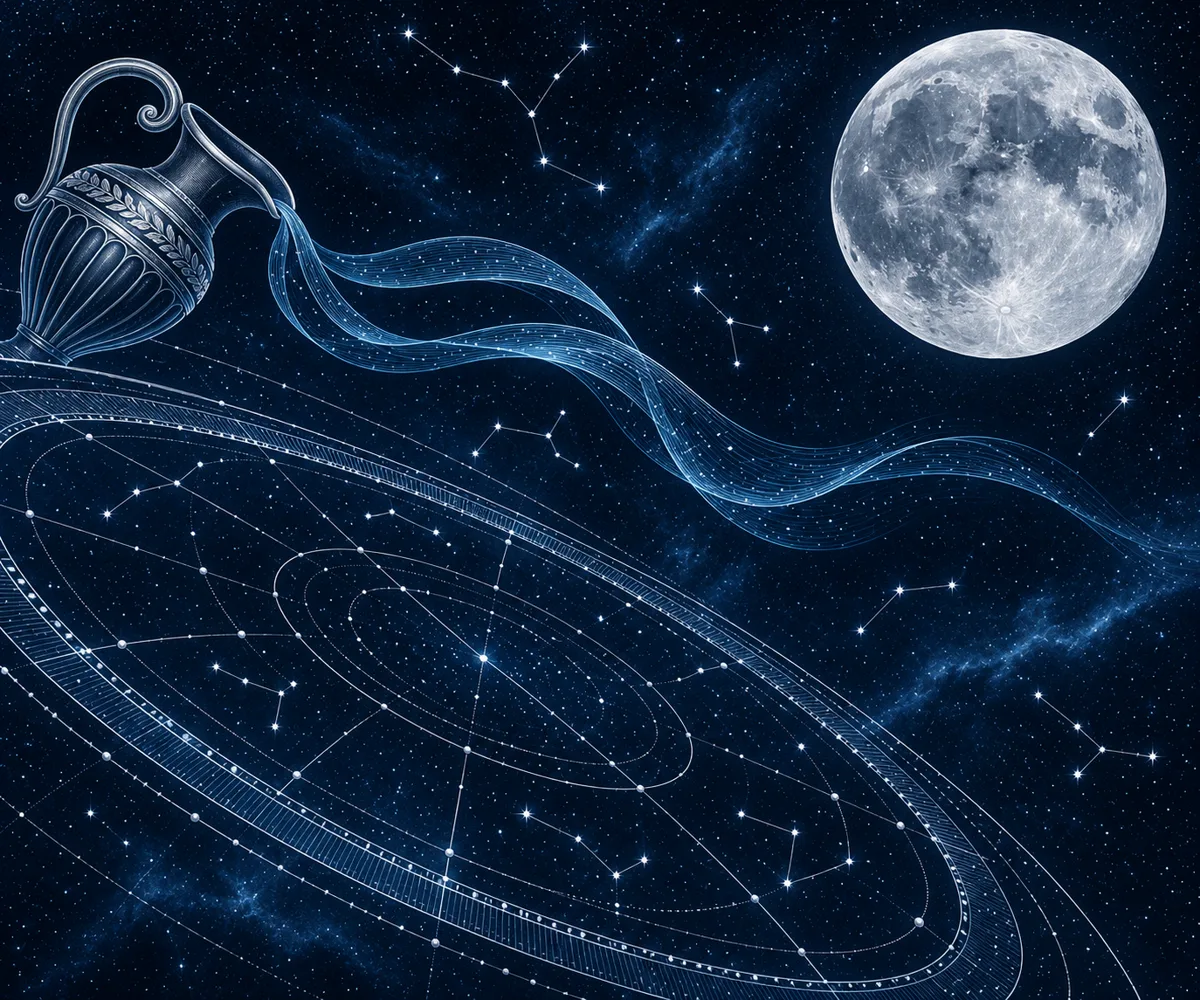
Around once a month, the moon is fully lit. Then, the very next night, it begins to shrink. That turning point is why so many witches use the full moon for release. It is the peak of the cycle, the moment to look at everything clearly before letting the light carry something away.
Every full moon has its own traditional name and sign, and those details are worth exploring. But you don’t need them for this ritual. It works in any month.
Why release at the full moon?
According to NASA, the moon goes from new to full and back in about 29.5 days. After the full moon its light shrinks night by night, and that waning light has long been used in witchcraft for letting go, banishing and endings. The full moon itself is the moment of greatest clarity, which makes it a natural time to see what you no longer need. My moon phase reference explains each phase.
What do I need?
- A white or silver candle.
- Paper, a pen and a heat-safe dish (or a bowl of water).
- Ten quiet minutes, ideally on the night of the full moon or the night after.
How do I do the full moon release ritual?
- Look at the moon if you can, even through a window. If it’s cloudy, that’s fine. It is still there.
- Light your candle and breathe slowly for a minute.
- Write what you are ready to release: a habit, a worry, a grudge, a version of yourself. Keep it to one to three things.
- Read each one aloud and finish with “I let this go with the waning light.”
- Release the paper. Burn it carefully in the dish, or tear it up and dissolve it in water, then pour the water away outside.
- Write one thing you’re grateful for and keep that paper.
What can I release?
- Habits: doom-scrolling at night, saying yes when you mean no.
- Worries: a fear that keeps circling, a what-if you cannot control.
- Grudges: resentment that costs you more than it costs them.
- Old stories: “I always mess this up”, “I am not the kind of person who…”
- Connections: a tie to someone you have outgrown. For this, a single-candle cord cutting is a good companion.
Choose things that are yours to let go of. Releasing a feeling or a habit is very different from trying to remove a person from your life; if someone is hurting you, practical help comes first.
How do I burn the paper safely?
Use a small piece of thin paper, a deep heat-safe dish, and a sink or a bowl of water nearby. Burn it away from curtains and anything else that can burn; the NFPA advises keeping candles at least 12 inches from anything flammable. If you live somewhere burning is not practical, the water method works just as well, and so does tearing the paper into small pieces and putting it in the bin.
What do I do over the next two weeks?
As the moon wanes, notice the moments when what you released tries to return. Each time, say quietly: “I’ve already let that go.” Repetition gives the ritual its strength.
If you set an intention at the new moon, this is also a good night to check how it is going. My new moon intention ritual pairs naturally with this one, and shadow work prompts for the waning moon can help you go deeper.
When does it need a stronger hand?
Some things do not loosen with one candle: an ex who keeps reappearing, a habit with deep roots. For those, my banishing and release rituals use cord, salt and the cauldron, and my cord cutting guide explains the types.
Questions people also ask
What should I release at the full moon?
One to three things that are yours to let go of: a habit, a worry, a grudge or an old story about yourself.
Do I have to burn the paper?
No. You can dissolve it in water and pour it away outside, or tear it into small pieces and put it in the bin. If you burn it, use a heat-safe dish and keep water nearby.
Does a full moon ritual work if it is cloudy?
Yes. The moon is still full behind the clouds, and the ritual works the same.
Can I do the ritual the night after the full moon?
Yes. The night of the full moon or the night after both work, and the waning nights that follow are traditionally used for release too.
Sources
- Moon Phases, NASA Science
- Candles, National Fire Protection Association (NFPA)
Keep reading
Rituals I cast for this
Cast the same day at my table, with ritual photos included and a reply to any question within 24 hours.
Banishing & Cord Cutting Spell
Letting go, boundaries & a fresh start
Breaking Cycles Spell
Break repeating cycles