

Candle Flame and Wax Meanings: What They Really Tell You
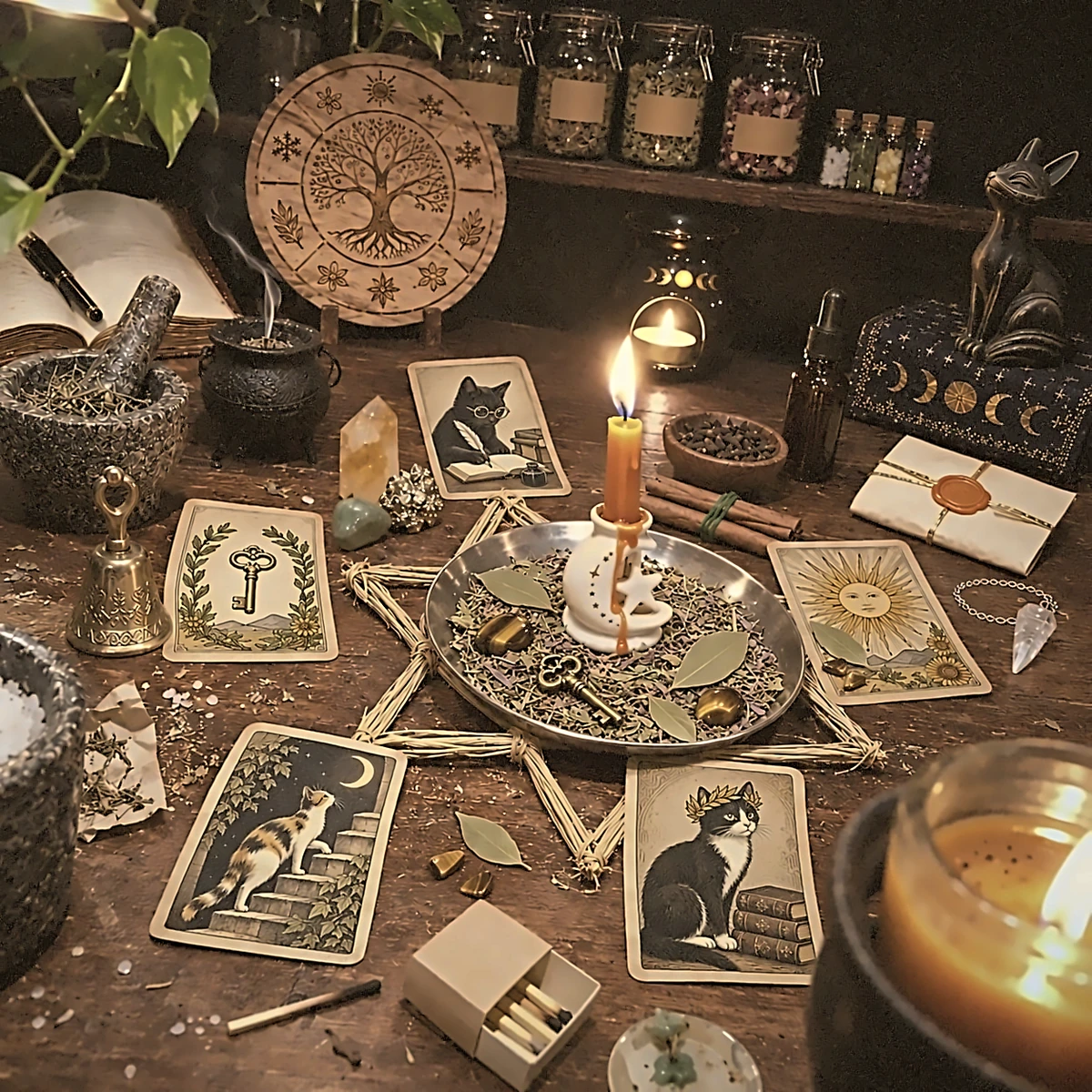
People send me photos of their candles more than anything else. A flame that would not stay lit. Wax that ran down one side. A glass jar gone black. They want to know whether it means the spell is blocked. Here is how I look at it: ordinary cause first, traditional reading second.
What does a high or dancing flame mean?
Ordinary cause: a wick that is too long, or a draught from a window, a door or a vent. A long wick pulls up more wax than it can burn cleanly, so the flame grows and flickers.
Traditional reading: strong energy going into the working. A dancing flame is often read as active, restless energy.
What does a low, weak or drowning flame mean?
Ordinary cause: a short wick, or a pool of melted wax that is too deep for the wick. Dressing a candle with too much oil does the same.
Traditional reading: resistance, or a working that needs more support. Before you read it that way, pour off a little wax or trim the oil next time.
What does black soot on the glass mean?
Ordinary cause: incomplete burning. An untrimmed wick, a draught or a jar candle that has burned down deep makes soot. Paraffin tends to smoke more than soy or beeswax.
Traditional reading: heavy energy being burned off, often taken as a sign that cleansing was needed.
The quick reference
| What you see | Most likely ordinary cause | Traditional reading |
|---|---|---|
| High, tall flame | Wick too long | Strong energy |
| Flickering or dancing | Draught, uneven wick | Active or restless energy |
| Crackling or popping | Moisture, oil or herbs in the wax | Messages or interference |
| Black soot | Untrimmed wick, draught | Heaviness being released |
| Tunnelling down the middle | Short first burn | Focused but narrow work |
| Wax running down one side | Candle leaning, draught on one side | Energy pulling one way |
| Flame goes out | Drowned wick, draught | Work finished or interrupted |
| Clean, steady burn | Trimmed wick, still air | Smooth working |
How I burn candles at my own table
I trim every wick before I light it, I set the candle in a holder on a fireproof plate, and I keep the room still. I never leave a lit candle alone. When the working is done, I photograph the table exactly as it stands, flame, drips and all, and describe it honestly in your report. A messy candle on my table is a candle, not a verdict on your wish.
That matters, because a candle can only tell you about itself. Whether your spell is working shows up in your situation: contact, offers, money, calm. My guide on how to tell if a spell is working explains what to track.
Should I relight a candle that went out?
Yes, if the working is not finished. Relight it, say your intention again and let it continue. If it keeps going out, trim the wick, pour off excess wax and move it out of the draught. Candles that go out are almost always a practical problem.
Safety first
Keep candles away from curtains, shelves and anything that can catch. Burn them on a heat-proof surface, out of reach of pets and children, and put them out before you leave the room or go to sleep. Fire services have the full checklist. If you want to learn to prepare a candle properly, start with dressing a candle and the candle colour meanings table.
Questions people also ask
What does it mean when a spell candle burns fast?
Usually a long wick, a draught or soft wax. Traditionally it is read as the working moving quickly, but check the ordinary causes first.
What does black smoke from a candle mean in a spell?
Black smoke or soot comes from incomplete burning, most often an untrimmed wick or a draught. Traditionally it is read as heavy energy being burned off.
Does a candle going out mean my spell failed?
No. A candle that goes out is almost always drowned or in a draught. Trim the wick, pour off excess wax and relight it with your intention.
Do you read the wax from my spell?
I photograph the candle exactly as it burned and describe it in your report. I do not treat the wax as a verdict on your wish; your situation is the real measure.
Sources
- Candles, National Fire Protection Association (NFPA)
Keep reading
Rituals I cast for this
Cast the same day at my table, with ritual photos included and a reply to any question within 24 hours.
Love & Romance Spell
Romance, connection & mutual affection
Money & Prosperity Spell
Income, stability & new opportunities
Protection & Cleansing Spell Bundle
Cleanse first, then shield